Prior Authorization Software: What It Does, Costs, and How to Choose

Nirmitee.io Engineering
Author
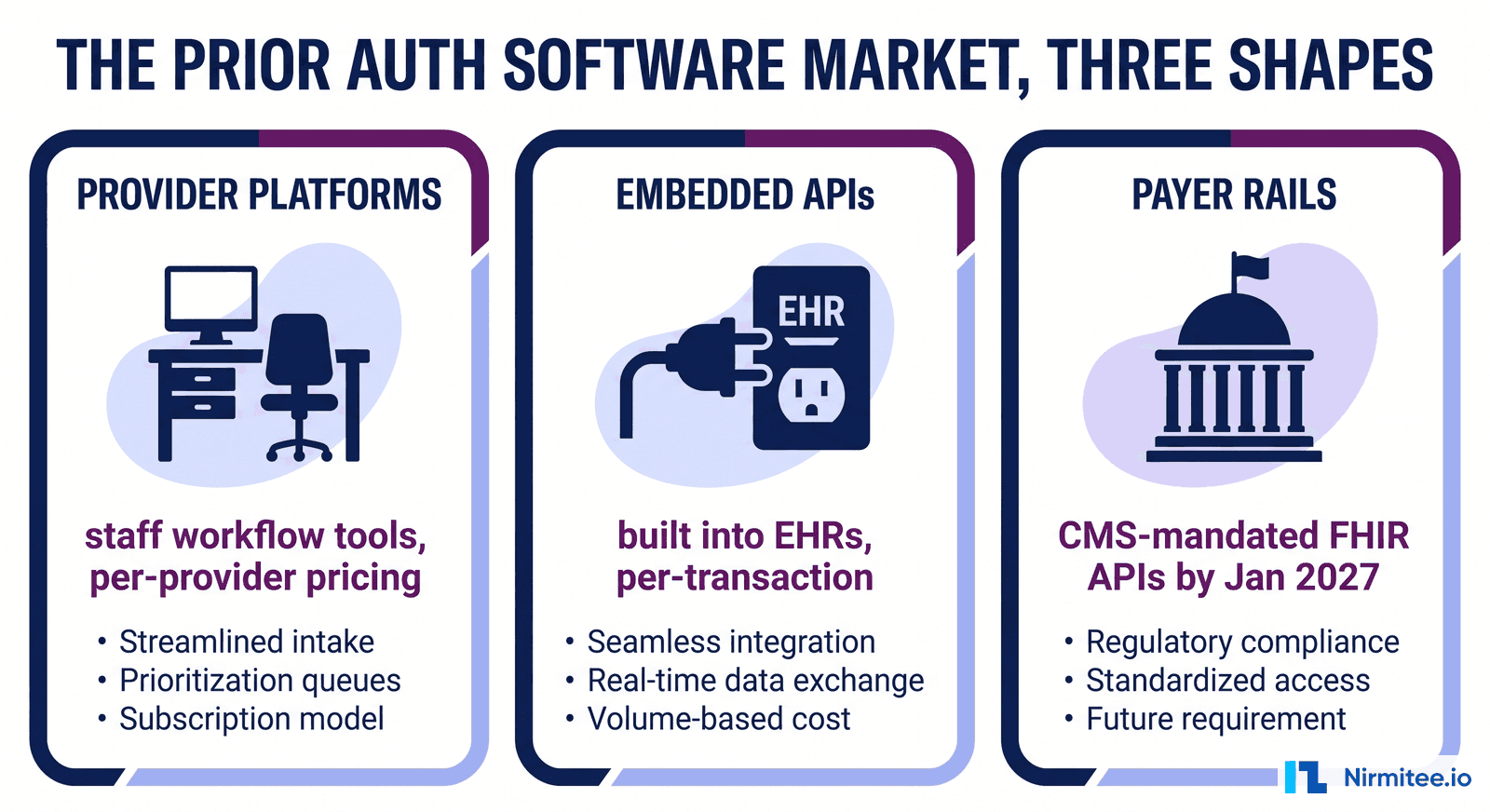
Prior authorization software automates the approval requests that stand between ordering care and delivering it — requirement checks, documentation, electronic submission, status tracking, and appeals. The market splits into three shapes: provider-side platforms your staff use, embedded APIs product teams build into EHRs, and payer-side rails that CMS is mandating into existence by January 2027. This guide maps what each does, what it costs, and how to choose.
What Prior Auth Software Actually Does
| Capability | What good looks like |
|---|---|
| Requirement determination | At order entry: this CPT + this plan → auth needed or not, with the payer's documentation list. Rules current per plan and date. |
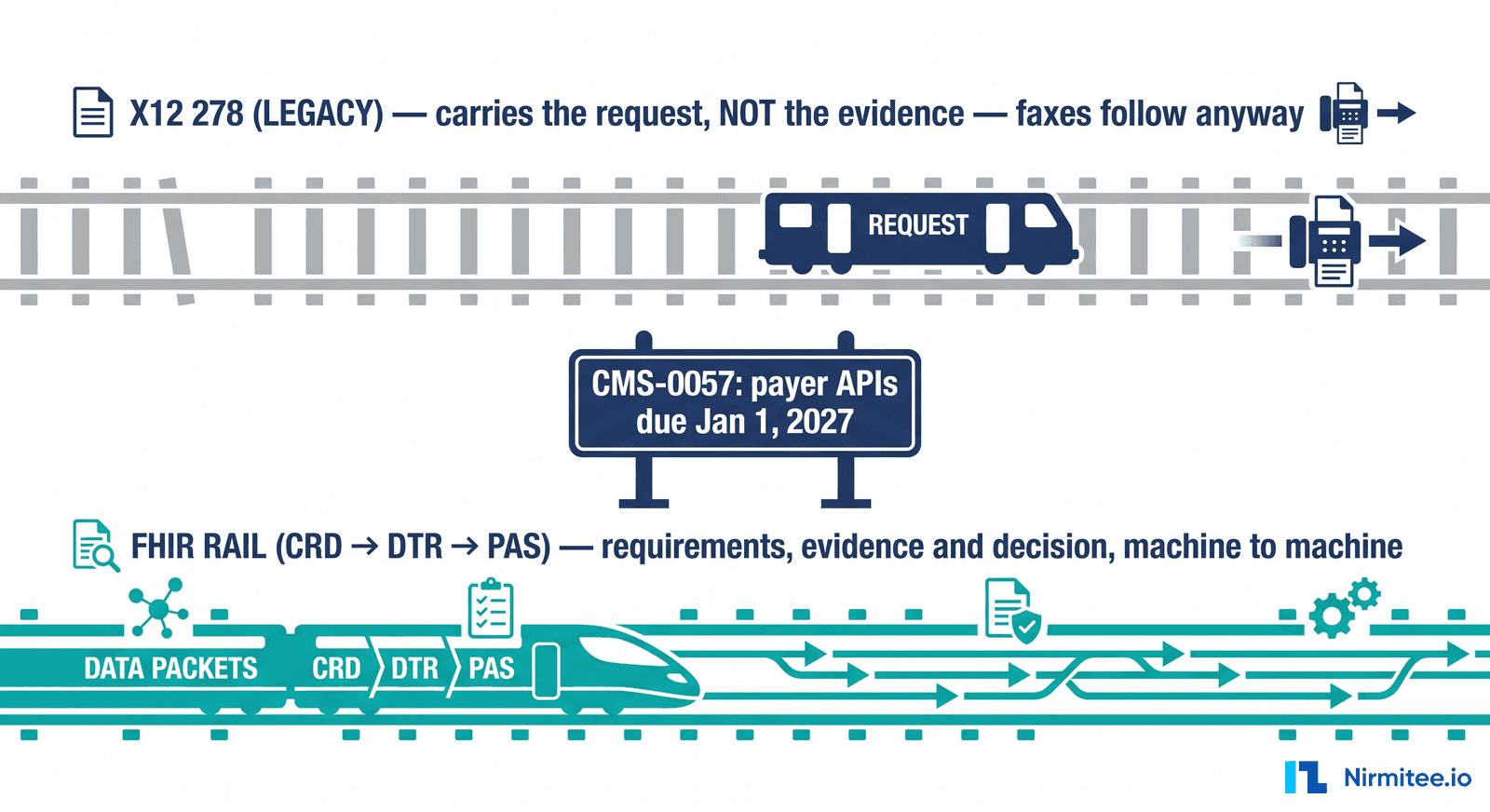
| Documentation assembly | Pulls the clinical evidence from the EHR against the payer's rules (Da Vinci CRD/DTR is the standards version of this). |
| Electronic submission | X12 278 and/or FHIR Prior Auth APIs — not portal screen-scraping that breaks monthly. |
| Status & decision tracking | Answers on the CMS clocks (72h/7d for government programs since Jan 2026), tied back to the order and the claim. |
| Denial & appeal workflow | Auth denials arrive with reasons attached (also mandated) and route to a worklist with the evidence pre-gathered. |
The Three Buyer Situations
1. You run a provider organization
You're buying a workflow product. Evaluate on rules coverage for your payers and specialties, EHR integration depth (order-entry hooks, not a side portal), and appeal tooling. Pricing is typically per-provider-per-month or per-transaction.
2. You build an EHR or digital-health platform
You're choosing infrastructure. The options mirror the claims stack: embed a vendor's PA API, build on the emerging payer FHIR rails, or a hybrid — own the workflow UX, rent the connectivity. The decision framework is the same five questions as our billing build-vs-buy guide; the twist is that CMS-0057 is standing up free payer-side APIs through 2027, which strengthens the build-on-rails case every quarter.
3. You're a payer (or sell to them)
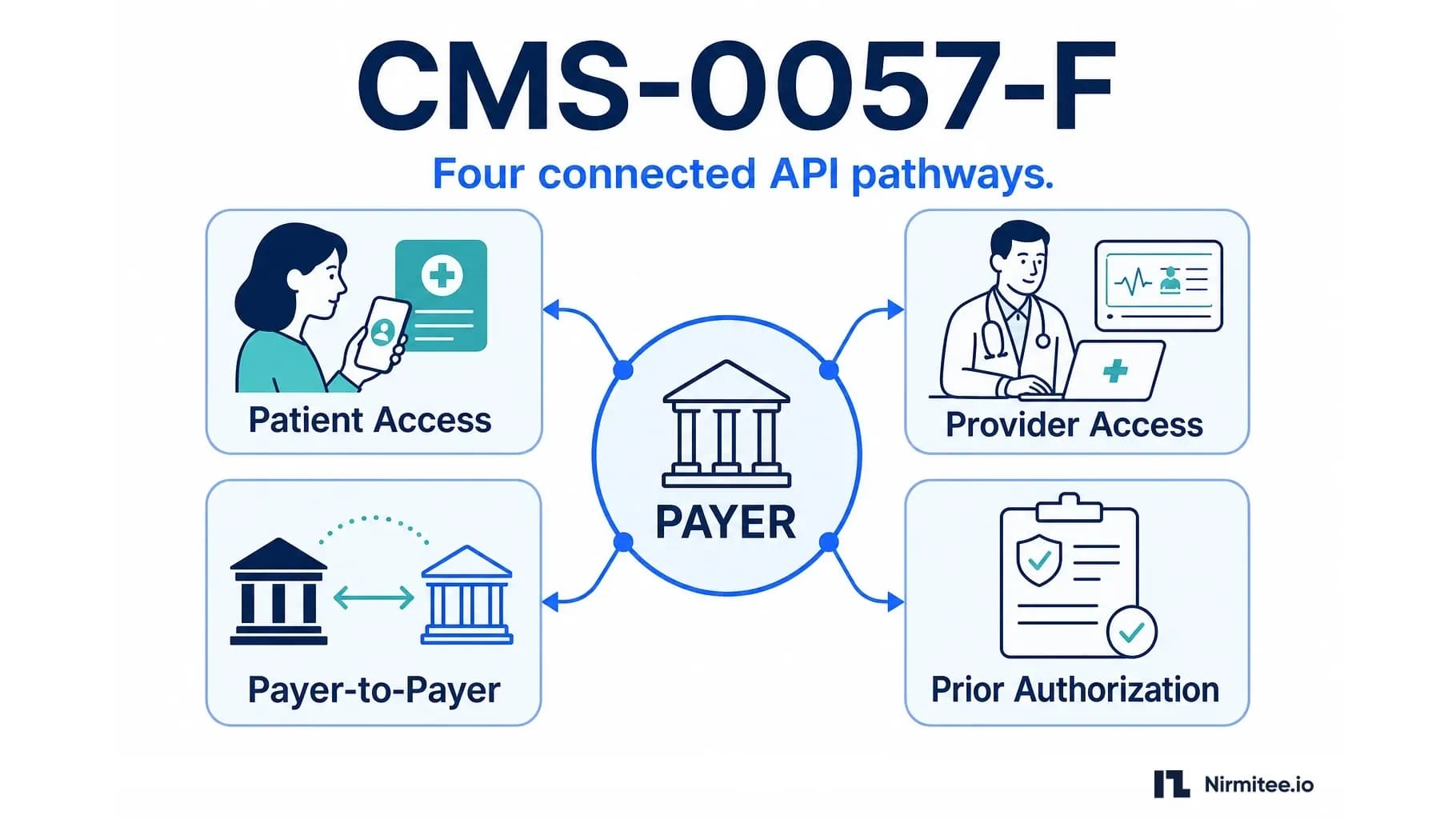
Compliance software: the four mandated APIs, decision-clock workflow, denial-reason plumbing, and the March 31 public metrics reporting. No certification exists — compliance is self-assured through conformance testing (Touchstone/Inferno) and an evidence trail. Our CMS-0057 guide details who must comply and how enforcement actually works.
What It Costs
- Transaction economics: $12.88 manual vs $0.05 electronic per PA (CAQH) — the automation case pays for itself on volume alone.
- Provider platforms: commonly per-provider-per-month subscriptions; total cost scales with specialty PA intensity.
- Embedded/API routes: per-transaction pricing plus your build — scope the build with our billing development cost breakdown; the PA module shares most of its plumbing with claims.
- The hidden line: rules maintenance. Payer requirements churn constantly; whoever owns the rules — you or the vendor — owns the ongoing cost.
Five Questions That Cut Through Vendor Demos
- What percentage of our payer mix do you cover with true electronic submission (not portal automation)?
- Where do your requirement rules come from, and how fast do they update when a payer changes policy?
- Do you support the FHIR Prior Authorization APIs payers are launching for January 2027 — and what's your CRD/DTR/PAS roadmap?
- How does auth status attach to the claim so CO-197 denials become impossible?
- What happens on denial — is appeal assembly part of the product or our problem?
We build prior authorization capability inside EHRs and health platforms — requirement engines, 278/FHIR submission, status tracking, appeals — and advise on the build-vs-embed decision with no vendor allegiance. See our prior authorization automation services or talk to our team.
Ready to scale?
Talk to our healthcare engineering team about building, integrating, and shipping faster.
Frequently Asked Questions
What does prior authorization software do?
How much does prior authorization software cost?
What should I look for in prior authorization software?
Do payers have to accept electronic prior authorization?
Is there a certification for CMS-0057 compliance?
Should an EHR vendor build or buy prior auth capability?