
Agentic AI for Healthcare Teams
Less work
between people
and better care.
Build AI agents for the workflows slowing your team down. Connect them to the right systems, measure what changes, and keep people in control of the decisions that matter.
For healthcare product, operations, and technology leaders.

works better is.
Start with your bottleneck
Which workflow
needs to move forward?
The right starting point is specific, measurable, and reviewable. Explore what an initial scope could look like.
For revenue-cycle and operations leaders
Reduce the handoffs around administrative work.
Start with a bounded workflow such as document preparation, request routing, or exception review. Connect it to the systems your team already uses.
Review handling time, exception volume, and rework against your existing process.
Workflow documents · System access · Review owners
Is this the right next step?
Start where the workflow
is ready for change.
You don’t need a complete AI specification. You do need a problem worth solving and people who can help define a good outcome.
A useful starting point
- A repeated task with clear inputs and outputs
- Access to relevant systems and approved data
- An owner who can review results and exceptions
- A way to compare performance with today’s process
Unclear data access or high-consequence autonomous decisions? Start with discovery and risk assessment, not a production commitment.
What you are engaging us to do
From a useful question
to a reviewable implementation.
We scope the work around your workflow, dependencies, and validation requirements. Each stage has something tangible to review.
- 01Workflow map · Scope · Success criteria
Workflow assessment
Understand the current process and decide where assistance belongs.
- 02Working prototype · Integration plan
Connected prototype
Test the approach with agreed data and system interfaces.
- 03Test results · Limitations · Review controls
Evaluation & safeguards
Review outputs, permissions, exceptions, and human handoffs.
- 04Release plan · Runbook · Ownership
Release & operational handover
Prepare the agreed release with monitoring and clear responsibilities.
Connected to your reality
The hard part is often
everything around the agent.
EHR access. Identity. Data quality. Permissions. Review queues. We bring healthcare integration and product engineering into the same conversation as AI.
Explore the integration expertiseReal Healthcare Challenges.
See how we approached them.
Evaluating an integration or product partner? Explore the systems, workflows, and technical decisions behind our work.
Explore all case studies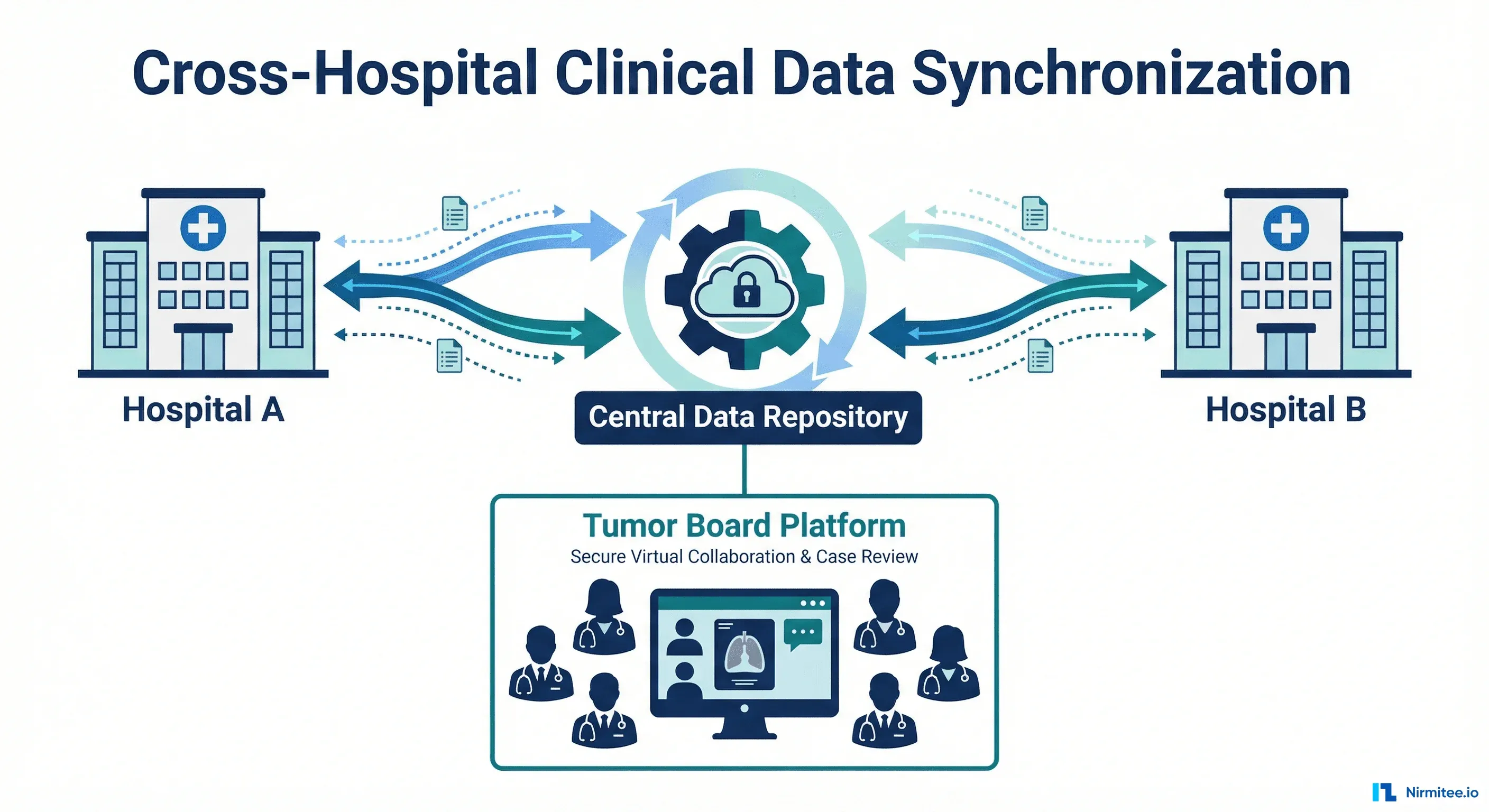 CASE STUDY / 01
Case Study: Cross-Hospital Clinical Data Synchronization for a Regional Telemedical Network
Executive Summary A regional hospital network in Northern Germany needed two independent hospitals to collaborate on cancer treatment decisions — but ...
Explore the implementation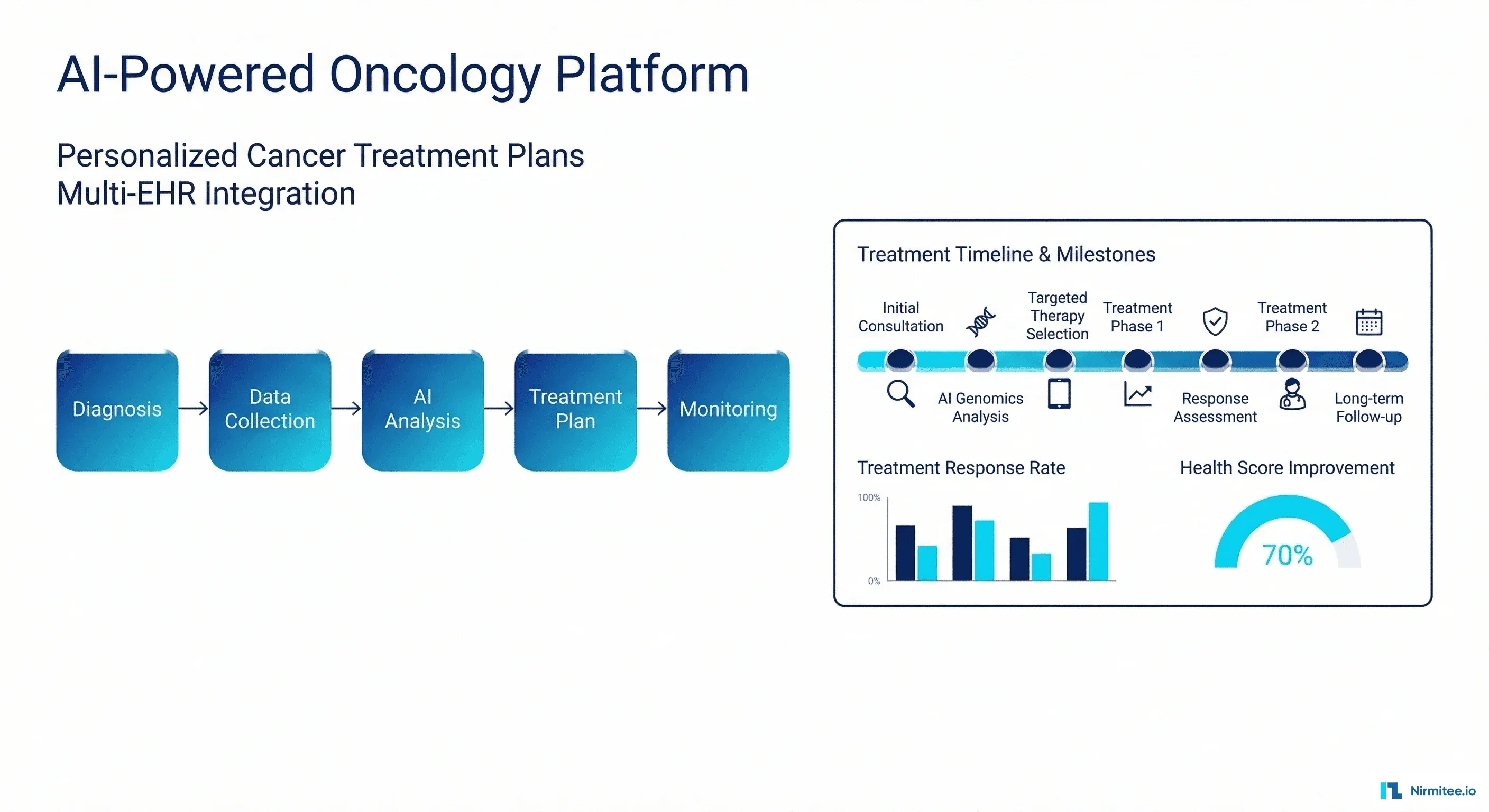 CASE STUDY / 02
AI-Powered Personalized Oncology Treatment Platform: A Technical Case Study
Executive Summary A US-based oncology health tech startup needed a platform that could aggregate patient data from multiple EHR systems and use AI to ...
Explore the implementation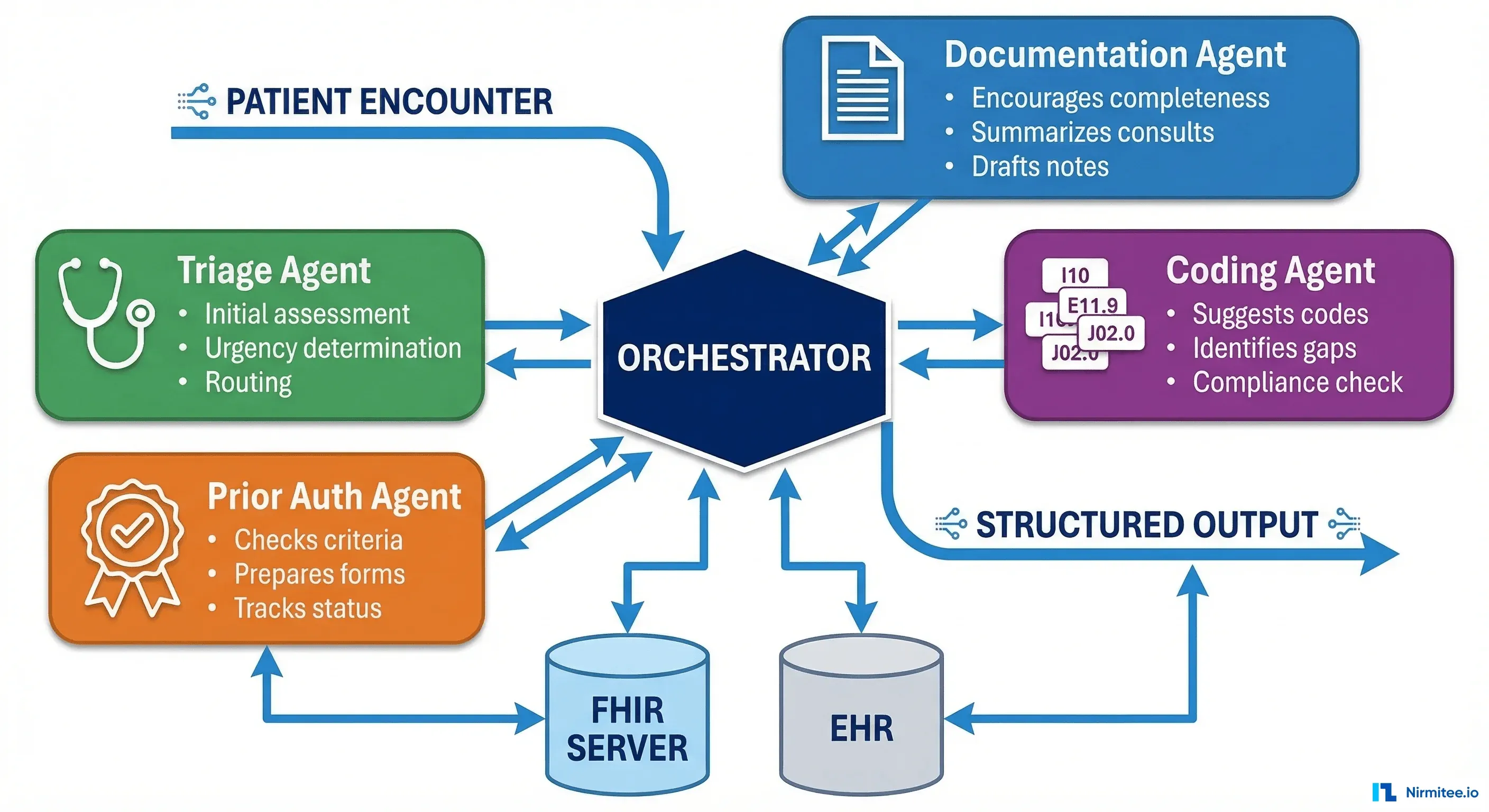 CASE STUDY / 03
Integrating Multi-AI Agents into Healthcare Apps: A Production Case Study
A single AI model can summarize a clinical note. It takes a multi-agent system to run a post-discharge workflow — generating the discharge summary, re...
Explore the implementationExplore specific possibilities
A closer look at
healthcare agent use cases.
Browse the existing agent library to guide your conversation. Suitability, availability, validation, and integration scope need assessment for your environment.
Diagnostic Imaging AI
Explore this use case Clinical IntelligenceClinical Decision Support System
Explore this use case Emergency MedicineIntelligent Patient Triage
Explore this use case Patient EngagementVirtual Health Assistant
Explore this use case Population HealthChronic Care Management AI
Explore this use case Clinical WorkflowClinical Documentation AI
Explore this use case Clinical ResearchClinical Trial Optimization AI
Explore this use caseThe practical questions
Know what you’re
saying yes to.
Are we buying an off-the-shelf agent?+
This page is a starting point for a scoped implementation conversation. The library illustrates possible workflows; integration, configuration, validation, and ongoing responsibilities are agreed for your environment.
How do you define the return on the work?+
Agree a baseline and workflow-specific success measures before implementation, such as handling time, rework, completion rate, and review effort. We do not promise a universal ROI figure.
Can it act without a person approving every step?+
That depends on the action, permissions, consequences, and your governance requirements. Define approval boundaries and escalation paths explicitly. Clinical and patient-facing uses need appropriate safety and regulatory review.
What affects cost and delivery time?+
Data readiness, system access, workflow complexity, validation, and operational requirements. A discovery conversation identifies those dependencies before a delivery proposal.
Can you work with our existing engineering team?+
Yes. We can discuss a scoped implementation or a dedicated team working with your product, clinical, and technical leads.
Start with one workflow
What is your team
still doing the hard way?
Bring the process, the systems involved, and the result you want. Let’s assess where an agent could help—and what it would take to build responsibly.